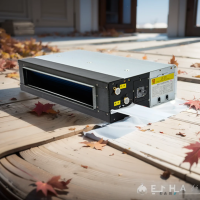
Concealed FCUs are often installed above ceilings, making filter access more difficult.
Filters should be cleaned or replaced every 1–3 months to maintain airflow and indoor air quality.
Clogged filters can cause weak airflow and increase energy consumption.
Dust and debris on the coil reduce heat transfer efficiency.
Clean coil fins periodically using a vacuum or compressed air.
For heavy dirt or scale, professional chemical cleaning may be required.
Ensure fan blades are clean and balanced to avoid noise and vibration.
Check motor bearings for wear and lubricate if needed.
Monitor fan motor performance to prevent overheating or failure.
Inspect control valves for leaks and ensure smooth operation.
Verify water flow is within design parameters.
Flush the hydronic system periodically to avoid scaling and blockages.
Concealed FCUs generate condensation during cooling.
Regularly clean the drain pan to prevent mold and bacterial growth.
Ensure the drainpipe slope is correct and free of clogs to avoid water leakage.
Test thermostats for accuracy and responsiveness.
Inspect wiring connections for looseness or corrosion.
Ensure integration with building management systems (BMS) works properly.
Weak airflow → Clean filters and check fan operation.
Unpleasant odors → Clean the coil, drain pan, and replace filters.
Water leakage from ceiling → Inspect drain system slope, clear blockages, and check condensation tray.
Temperature imbalance → Verify thermostat calibration and water flow balance.
Concealed water system fan coil units require consistent and professional maintenance due to their hidden installation. Paying close attention to filters, coils, drainage, and control systems ensures reliable operation, prevents costly water damage, and extends the unit’s service life.
Q1: How often should concealed fan coil units be inspected?
A: At least twice a year—once before cooling season and once before heating season.
Q2: Why does my concealed FCU leak water?
A: The most common causes are clogged drainage pipes, improper slope, or a dirty drip tray.
Q3: Is concealed FCU maintenance more difficult than exposed units?
A: Yes, because access is limited, professional servicing is often required.